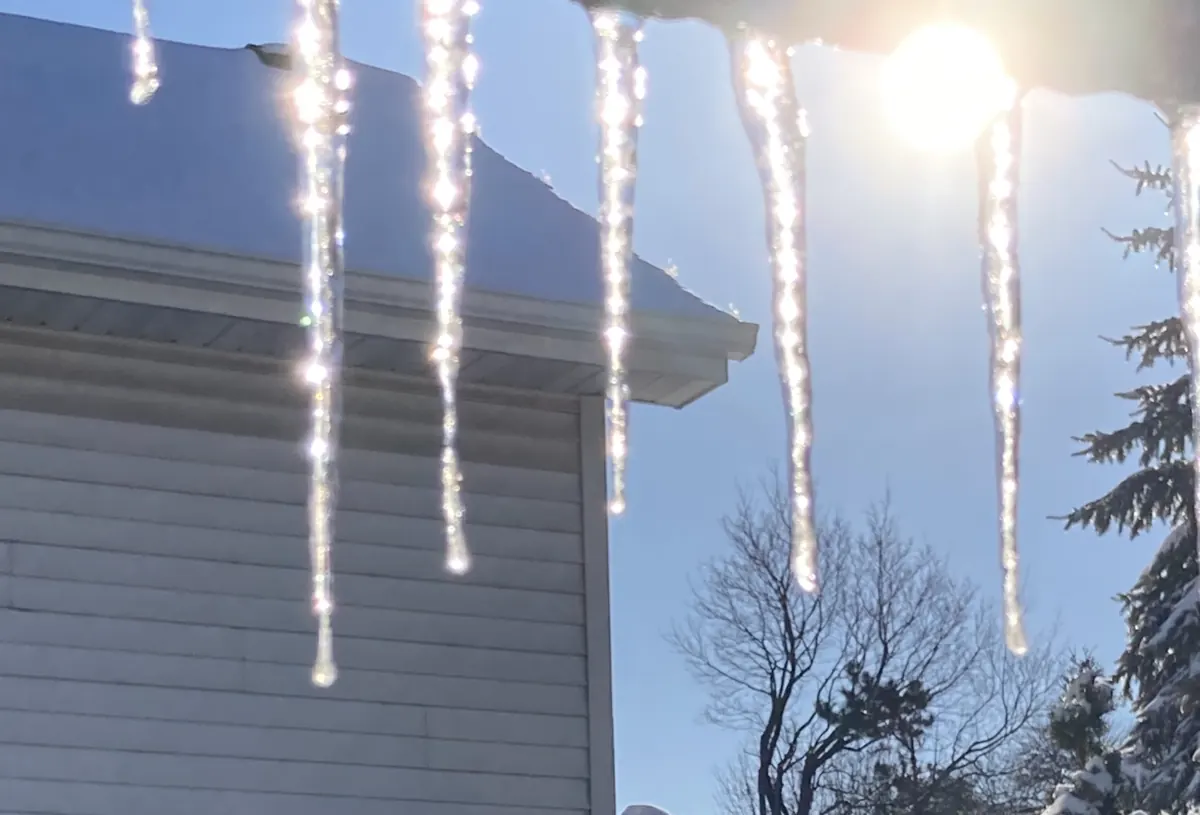
Every hard Massachusetts winter brings a wave of ice dam claims. Snow melts on a warm roof, refreezes at the cold eaves and builds a ridge of ice. Meltwater pools behind it, works under the shingles and finds its way into walls and ceilings. The winter of 2015, when Boston saw roughly 110 inches of snow, made ice dams a household phrase from the Berkshires to Cape Cod.
The visible stain is usually the smallest part of the problem. Here is what we often see left out of first estimates.
Why ice dam damage hides
Water from an ice dam travels. It runs along rafters, soaks into insulation and pools on top plates before it ever shows on a ceiling. By the time a stain appears in a second-floor bedroom of a Cape, the wall cavity below the eave may have been wet for weeks. Adjusters inspecting in February, with snow still on the roof, may only see the interior surface.
Items that commonly drop out
- Wet insulation in the attic and in exterior wall cavities, which loses value when soaked.
- Drywall or plaster above and below the stain, since water rarely stops at the edge of a mark.
- Trim, casings and built-ins near windows below the eaves.
- Roof underlayment and ice-and-water shield along the eave line.
- Paint for the whole room, not just a patch, so the finish matches.
- Mold remediation where moisture lingered, subject to any policy sub-limit.
Coverage versus amount
Many homeowner forms cover interior water damage that results from an ice dam, while removing the ice itself or repairing a roof for age-related wear may not be covered. Those are coverage questions, and the answer depends on your policy. Appraisal deals with the amount of covered damage, so it helps to be clear on what the insurer has accepted before invoking the process.
Plaster walls in older homes
Many Massachusetts houses built before the 1950s have plaster on wood or metal lath. Repairing plaster is different from patching drywall, and estimates sometimes price a drywall swap that does not match the existing walls. Whether matching or like-kind materials are owed depends on the policy and the facts, but the pricing question is one an appraisal panel can address.
How to build a stronger file
Ask your contractor or mitigation company for moisture readings with locations marked on a sketch. Keep invoices for roof raking, steaming and any emergency work. If insulation was pulled, photograph it before it goes in a dumpster. Note which rooms were affected and how long they stayed wet.
Keep a simple log as the season goes on. Write down each storm, the snow depth on the roof if you can estimate it, the dates you raked or hired someone to clear the eaves and the first day you noticed water inside. Ice dam claims often stretch over weeks of freeze and thaw, and a log helps show that the interior damage came from a specific event rather than from long-term wear. It also helps your appraiser explain the timeline to the other side and, if needed, to an umpire.
If the insurer’s adjuster inspected while the roof was still buried, ask whether a follow-up inspection can be scheduled. Many disputes shrink once both sides can see the eave line, the drip edge and the condition of the shingles above the leak.
A second inspection after the snow clears can reveal shingle and underlayment damage the first visit could not see. For heavy-snow seasons, our roof snow load estimator can help you understand how much weight a roof was carrying.
An illustrative gap
For illustration, imagine a first estimate of $6,500 covering a ceiling patch and paint in one bedroom of a Worcester Colonial. A fuller scope that includes attic insulation, two exterior wall cavities, window trim and paint for the whole room might come to $14,000. These numbers are examples only, not a prediction for any claim.
If your estimate looks thin, our ice dam and snow load appraisal page explains how we review these claims.