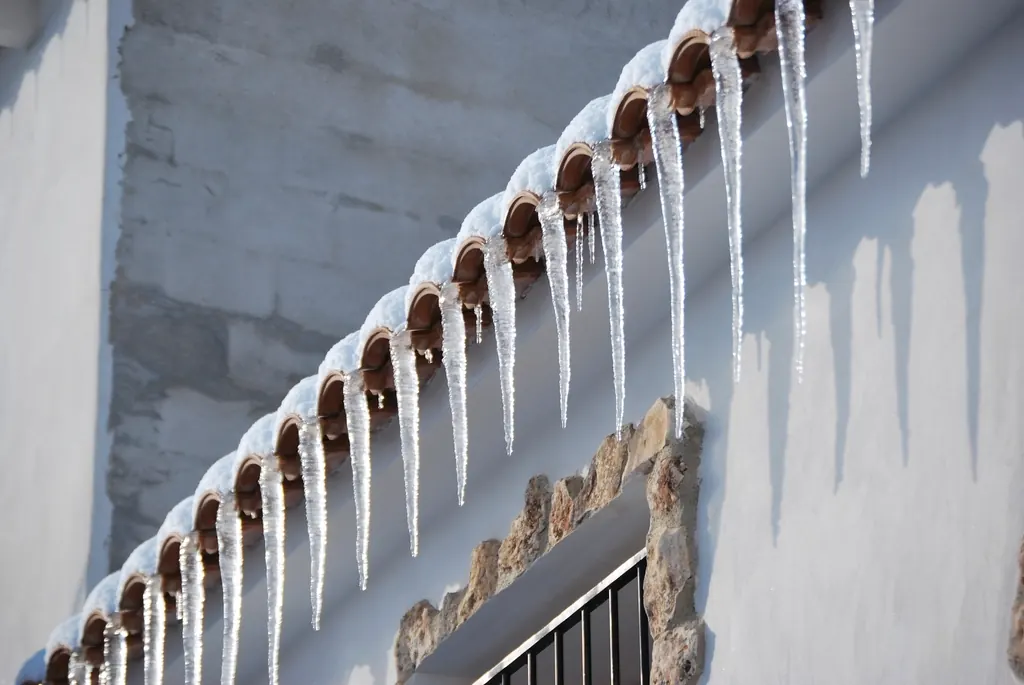
Ice dam insurance claim appraisal is one of the most Massachusetts-specific services we offer. An ice dam forms when heat escaping through the roof melts snow, the water runs down to the cold eaves and refreezes, and the growing ridge of ice traps more water behind it. That water works under shingles and into walls and ceilings. Capes with knee walls, older Colonials with little insulation and low-slope additions are especially prone.
What we see on ice dam claims
The first visible sign is usually a brown stain on a ceiling or water running down a window. By then, water may have been seeping into the wall cavity for days.
- Wet insulation inside exterior walls and knee walls.
- Plaster damage that spreads well beyond the stain.
- Window casings and sills soaked and swelling.
- Exterior gutters torn off by the weight of ice.
- Shingle and underlayment damage along the eaves.
The estimate often stops at the stain
Carriers sometimes estimate a ceiling patch and paint. Opening the wall frequently tells a different story. Our guide on ice dam claims and what gets missed covers the details.
Snow load and roof collapse
Heavy, wet snow can overload a roof, especially flat or low-slope roofs on commercial buildings, porches, carports and barns. In 2015, collapses were reported across eastern Massachusetts. Many policies cover collapse caused by the weight of ice and snow, often with specific conditions. Damage short of collapse, like cracked rafters or sagging ridges, can also be part of the claim.
| Snow type | Relative weight |
|---|---|
| Fresh, light powder | Lightest |
| Settled or wet snow | Heavier, often several times fresh powder |
| Ice | Heaviest by volume |
The roof snow load estimator gives a rough, illustrative sense of how much weight a roof may be carrying. It is not an engineering assessment.
Why Massachusetts houses are so prone
Much of the housing stock predates modern insulation and ventilation standards. Capes with finished half-stories, Victorians with complex rooflines and additions tied into older roofs all create warm spots and valleys where ice builds. A few days of sun after a big storm, followed by hard overnight freezes, is the classic setup. That is why claims cluster in late January and February, and why a single bad winter can produce so many at once.
Building the file
We photograph the eaves, attic and interior, take moisture readings in walls, and document the extent of saturated insulation. Our estimate covers interior repairs, roof and gutter work as covered, and any reasonable emergency removal costs your policy allows. We work across Greater Boston, Central Massachusetts and the Berkshires, including Boston and Worcester.
Common questions
Is ice dam damage covered by homeowners insurance?
Interior water damage caused by an ice dam is commonly covered, while the ice dam itself and routine snow removal often are not. Policy wording varies, so check yours.
Should I remove the ice dam myself?
Climbing onto an icy roof is dangerous. Many people hire professionals, and some policies may cover reasonable emergency measures. Keep receipts.
Can appraisal include the cost of opening walls?
If opening walls is a necessary part of repairing a covered loss, the panel can generally value it. Moisture readings and photos support the need.