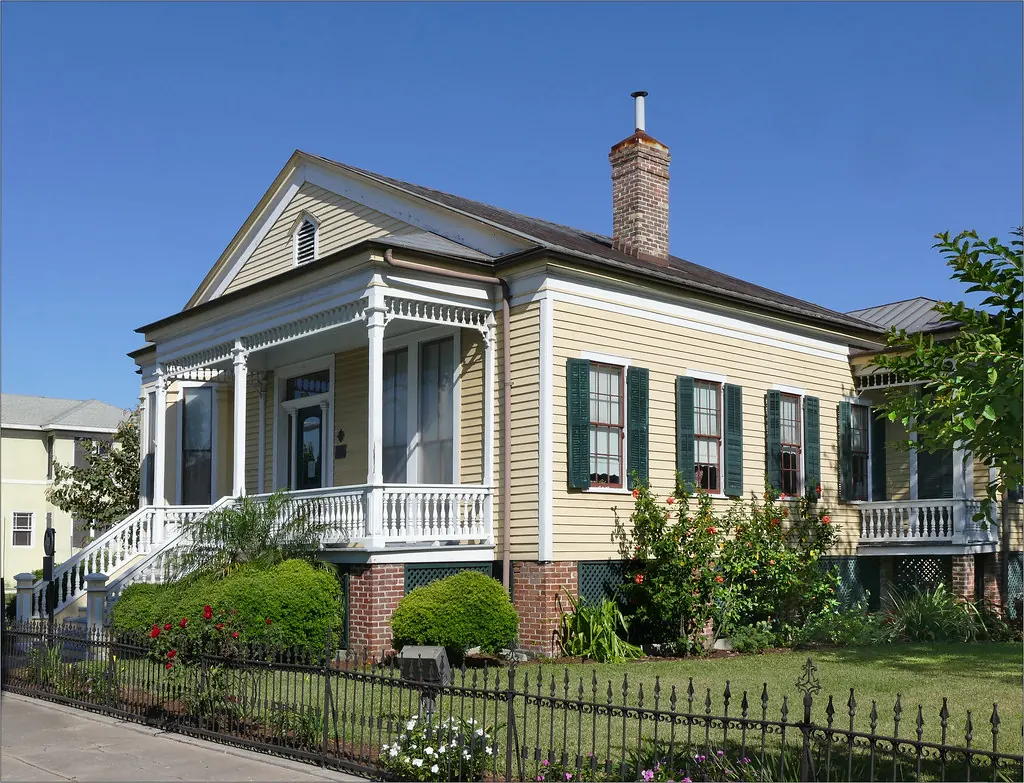
What we see on Massachusetts house claims
Most of our home insurance claim appraisal work involves houses that were built long before modern estimating software. A 1920s Colonial in Newton, a Cape in Plymouth, a Queen Anne Victorian in Salem or a triple-decker in Worcester can each have materials and layouts the carrier’s first estimate never accounts for. The adjuster is often working fast after a regional storm and leans on default line items.
- Three-coat plaster on lath priced as half-inch drywall.
- Original oak or heart pine floors treated as a simple “refinish” when boards need replacement and weaving.
- Cedar shingle siding on South Shore and Cape homes priced as vinyl.
- Steep, cut-up roofs measured as if they were simple gables.
- Lead-safe work practices left out on pre-1978 houses.
Triple-deckers and owner-occupied multi-families
Two- and three-family houses are common in Dorchester, Lowell, New Bedford, Brockton and Fall River. A single loss may touch common stairways, porches, a shared roof and several separate units. Estimates sometimes cover one unit and quietly drop the rest, or miss the rear porch system altogether.
Dwelling fire versus homeowner forms
If you live in one unit and rent the others, you may carry a homeowner policy, a dwelling fire policy, or a mix. Loss of rents and the exact appraisal wording can differ. We read the form you actually have. Our guide to triple-decker insurance claims goes deeper.
How the estimate usually falls short
| Item | Common carrier approach | What we look at |
|---|---|---|
| Walls | Drywall patch | Plaster type, lath, matching texture |
| Floors | Refinish one room | Continuous flooring through openings |
| Trim | Stock casing | Profile, species, millwork labor |
| Code items | Omitted | Ordinance or law coverage on your form |
None of this guarantees a higher award. It means the panel sees the house that actually exists.
Pricing that fits the region
Repair costs are not uniform across the state. Contractors on the Cape and Islands often charge more for travel and short seasons, Greater Boston labor runs high, and specialty trades such as plasterers and slate roofers can be scarce in the Berkshires. We price each line for where your house actually sits, and we note the source of any unusual price so the other appraiser can check it. Where a reasonable contractor in your area simply could not do the work at the carrier’s rate, we say so and show why.
When to call
Call after you have the carrier’s written estimate and a contractor’s estimate that disagrees with it. We will review both, tell you where the real gap is, and say plainly if we think a supplement request may be simpler than appraisal. We work statewide, including Boston neighborhoods and Worcester.
Common questions
Does appraisal work for small house claims?
It can, but costs matter. When the gap between estimates is only a few thousand dollars, a supplement request with good documentation is often more practical.
Will appraisal cover my contents too?
If contents are part of the disputed amount and your policy’s appraisal clause applies to them, the panel can value them. Contents work needs a detailed inventory.
My house is over 100 years old. Does that change anything?
It often changes the scope. Plaster, original millwork and lead-safe practices all affect cost, and the panel should see that documented.